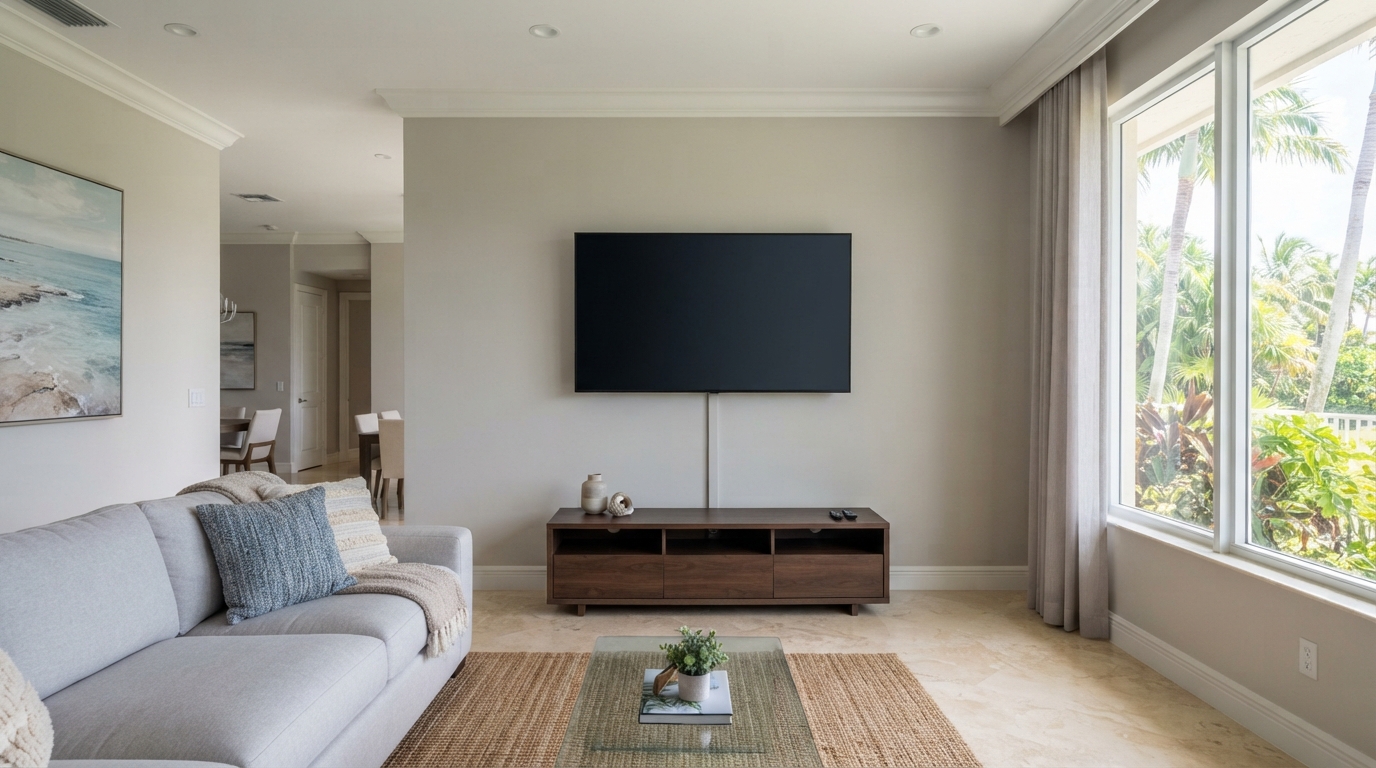
You find the perfect spot for a new television, open the wall bracket, and discover that the instructions mention wood studs, masonry anchors, and other options. Which one applies to your wall? In a Miami house or condominium, a painted surface does not tell you what is behind it. The wall might be drywall over wood framing, drywall over metal studs, masonry, or a layered assembly.
The safe mounting plan begins with the wall, the television, and the bracket—not the drill. A TV is a heavy object that must be supported by a suitable structural anchoring method, not simply held by a decorative wall finish.
Identify the wall assembly before choosing anchors
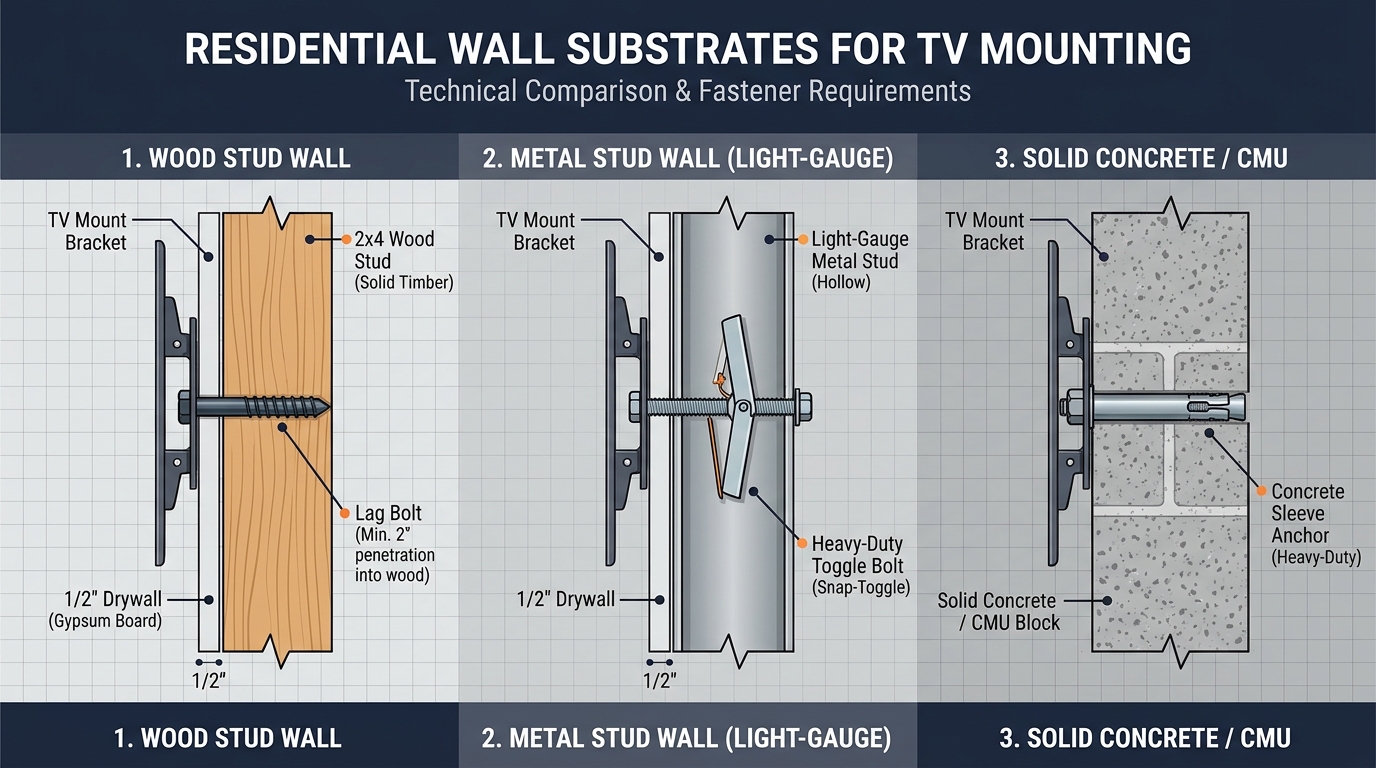
Drywall with wood studs
Here the painted drywall is the visible finish, while the framing behind it may provide the structural attachment. Appropriate bracket fasteners need to engage the supporting structure according to the mount and wall specifications. Stud spacing, location, condition, and hardware requirements all matter.
A stud finder can help locate framing, but its reading should be checked. Unexpected conditions—pipes, wiring, backing, or unusual framing—make blind drilling a bad idea.
Drywall with metal studs
Metal studs are not identical to wood studs, and standard wood-lag instructions may not apply. TV mounts, brackets, and approved fastening systems have different requirements for the assembly. Do not guess based on a similar-looking hole or substitute hardware without confirming the installation system.
Concrete or concrete block
A concrete or masonry wall may require anchors specifically rated for that substrate and load. A decorative plaster or drywall layer can make the base wall harder to identify. Hollow concrete block behaves differently from solid poured concrete, and anchor selection must account for the actual material.
Tile, plaster, and other finished surfaces
A finish layer can crack during drilling and may not provide structural strength. Concealed services and waterproofed areas add risk. The underlying support still determines whether and how the mount can be installed.
Unsure what your wall is made of? Ask HITU for a TV-mounting estimate and send photos of the intended wall, the TV’s model, and the mount you purchased. Choosing the right installation method is more important than using the same anchors in every home.
Check your TV and bracket together
Before installation, verify the television’s weight, mounting-hole standard, and the bracket’s rated capacity and permitted wall types. A compatible VESA pattern does not by itself prove the wall installation is safe. Follow both the television and bracket manufacturer instructions, including fastener specifications and maximum loads.
A fixed mount and a full-motion articulating mount place different demands on the attachment. An extended arm can create additional leverage on the wall, so avoid treating a bracket’s capacity as a blanket rating for every installation method.
The U.S. Consumer Product Safety Commission recommends securing televisions and furniture to prevent tip-over incidents. A properly installed wall mount also helps reduce risks created by unstable furniture setups.
Pick the viewing location before the hole pattern
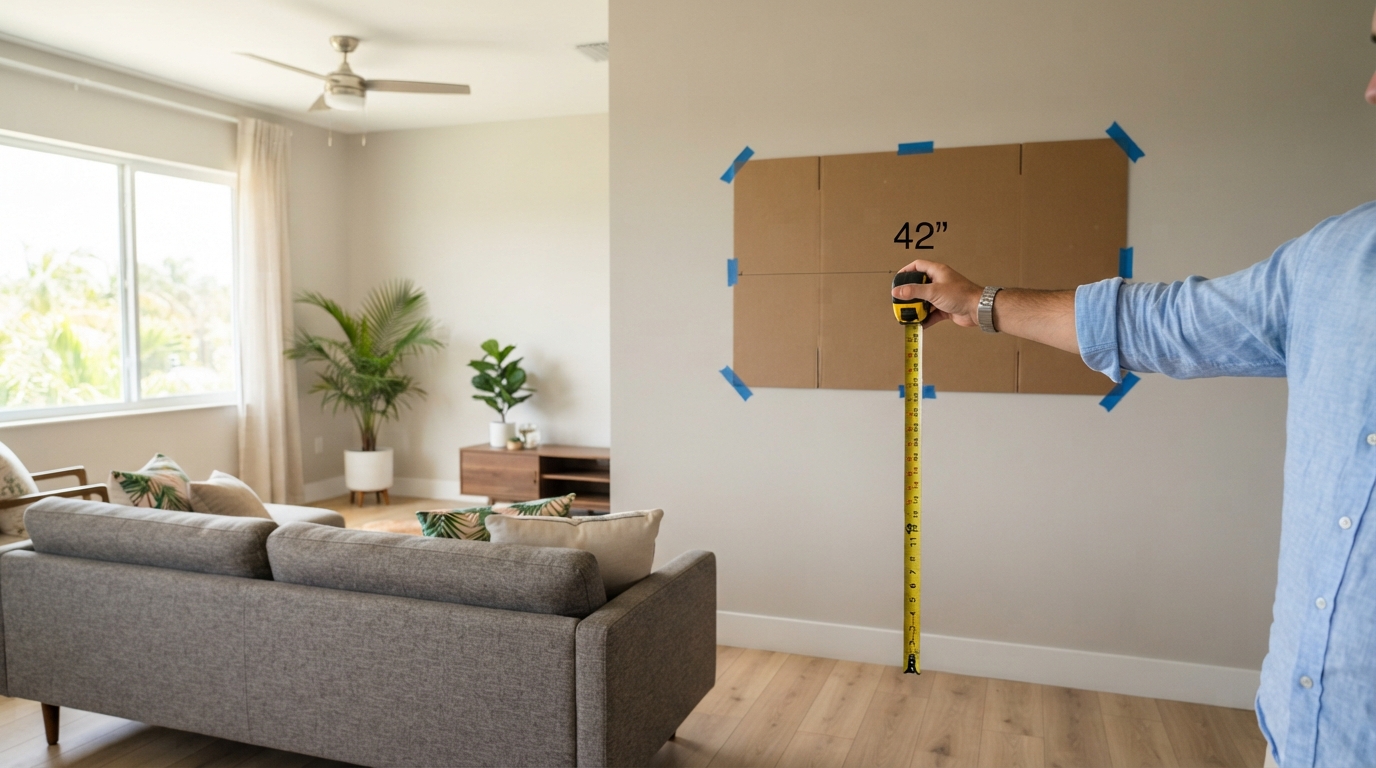
Stand or sit where people normally watch. Check for screen reflections, viewing distance, glare from the windows, and access to existing power and signal connections. In a smaller living room, a TV that is too high may force uncomfortable viewing. In a bedroom, the ideal placement may differ from a seated living-room setup.
Next consider access for the bracket’s movement, ventilation clearances, cable bends, and nearby doors. If you have a soundbar, shelves, or game console, plan their placement at the same time.
The existing TV Mounting in Miami service page outlines the service, while Expert TV Mounting for a Stunning Home Setup covers visual planning. This guide focuses specifically on choosing a safe wall and setup.
Do not forget power and cable routing
A cable hanging below the television may not look ideal, but hiding wiring must be done safely and according to applicable rules. Standard TV power cords should not simply be run through a wall cavity. Concealed electrical work can require a listed in-wall system and a properly licensed electrical professional, depending on the work and local requirements.
Data cables, soundbar connections, and media cables also need a realistic path. Plan for future access rather than permanently trapping connections behind a heavy screen.
In a condominium, confirm applicable owner/association rules before drilling shared walls or modifying fire-rated or other regulated assemblies. If the mounting wall is adjacent to a bathroom or kitchen, hidden plumbing and wiring deserve extra caution.
What can go wrong with a rushed installation?
An incorrectly supported mount can pull free. Drilling without knowing the wall can damage hidden services. Over-tightening hardware can crack materials or damage the TV. A screen placed too close to a door can be bumped; a full-motion arm can hit trim or a neighboring wall.
A professional installation is useful not just because it puts the TV on the wall, but because it examines these conditions first. Ask what wall construction the installer expects, what bracket is compatible, and how cables will be addressed.
Ready to mount it correctly? Request professional TV mounting in Miami or send us the job details. HITU can assess the request and identify when a specialized or licensed trade is needed.