The bedroom door sticks. A paint patch is peeling outside. Your guest bathroom needs new caulk, and the garage coating looks terrible. Then you notice a new brown stain on the ceiling. Which repair should you tackle first?
The answer is rarely the one that bothers you most when you look at it. Prioritize safety and active damage, then protect the home, then improve appearance and convenience. That simple order keeps a weekend punch list from becoming a collection of expensive surprises.
A simple three-level repair system
Instead of one long checklist, divide repairs into three groups:
| Priority | What belongs here | Typical next step |
|---|---|---|
| 1. Safety and active damage | Water near electricity, sagging ceiling, uncontrolled leaks, unsafe loose fixtures, serious structural concerns | Make the area safe, stop use if appropriate, and contact the right emergency or licensed professional |
| 2. Damage prevention | Failed shower seal, deteriorating exterior finish, recurring moisture, a door that admits rain | Investigate cause, plan work promptly, and prevent damage from spreading |
| 3. Convenience and appearance | Small drywall holes, squeaky hardware, cosmetic paint touch-ups, room refresh | Group tasks into a practical punch list |
These are decision categories, not a guarantee that every symptom has the same level of urgency. If in doubt, start with the safer option and obtain professional assessment.
Have a list but don’t know where to start? Send HITU your repair photos and priorities. We can help review appropriate maintenance work and separate items that need licensed specialists.
Priority 1: Stop active damage and address immediate hazards
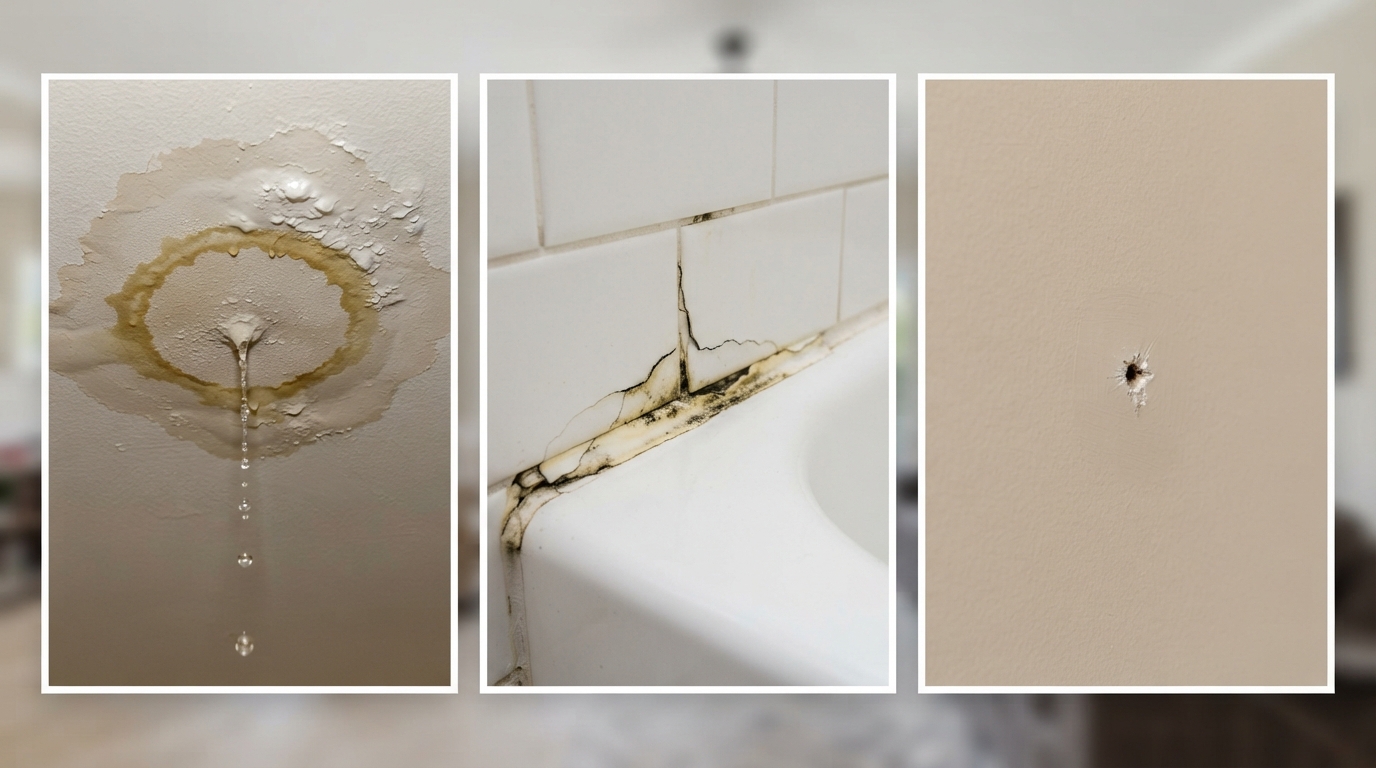
A new ceiling stain is a different problem from a faded wall color. A stain that grows after rain or a leak can indicate continuing water intrusion. If the ceiling sags or water is near electrical equipment, keep clear and seek urgent help rather than planning an ordinary paint job. Read Water Stain on the Ceiling? What to Check First.
The same rule applies to structural movement, unsafe mounting, smoke or burning odors from electrical equipment, and any condition that could injure someone. Do not frame hazardous work as a standard handyman visit.
In a condo, notify the property manager or association when shared systems, unit boundaries, or common elements may be involved. Make sure you understand who is authorized to act.
Priority 2: Prevent moisture and deterioration from spreading
A narrow crack in the shower’s sealing joint can be easy to ignore. Over time, a failed joint can let water reach places where it shouldn’t. Check whether the problem is a maintenance-level sealant issue or a sign of loose tile and damaged waterproofing. Start with Shower Caulk Cracking or Peeling? and Cracked Shower Grout or Caulk?.
Peeling exterior paint is another useful example. Sometimes it is a surface coating issue; sometimes it signals persistent dampness or a failed seal. Our South Florida exterior paint guide walks through the clues.
A sticking door may be only an annoying hinge problem, but swelling and visible water damage can move it into the prevention category. See Why Doors Stick in Humid Weather.
Priority 3: Bundle small jobs efficiently
Once urgent and damage-prevention work is under control, group the quick jobs. One trip can sometimes address several unrelated maintenance items more efficiently than arranging a separate visit for each, depending on the work and site conditions.
A punch list might include patching old picture holes, adjusting an interior door, replacing suitable worn hardware, hanging shelves where the wall can support them, and touching up a prepared painted area. For small wall damage, use How to Patch Small Drywall Holes.
If you are also planning a room refresh, the Interior Paint Calculator can help estimate paint quantities. If the exterior needs a finish plan, use the Exterior Paint Calculator. Calculators assist with materials; they do not diagnose underlying damage.
Build a one-page homeowner repair tracker
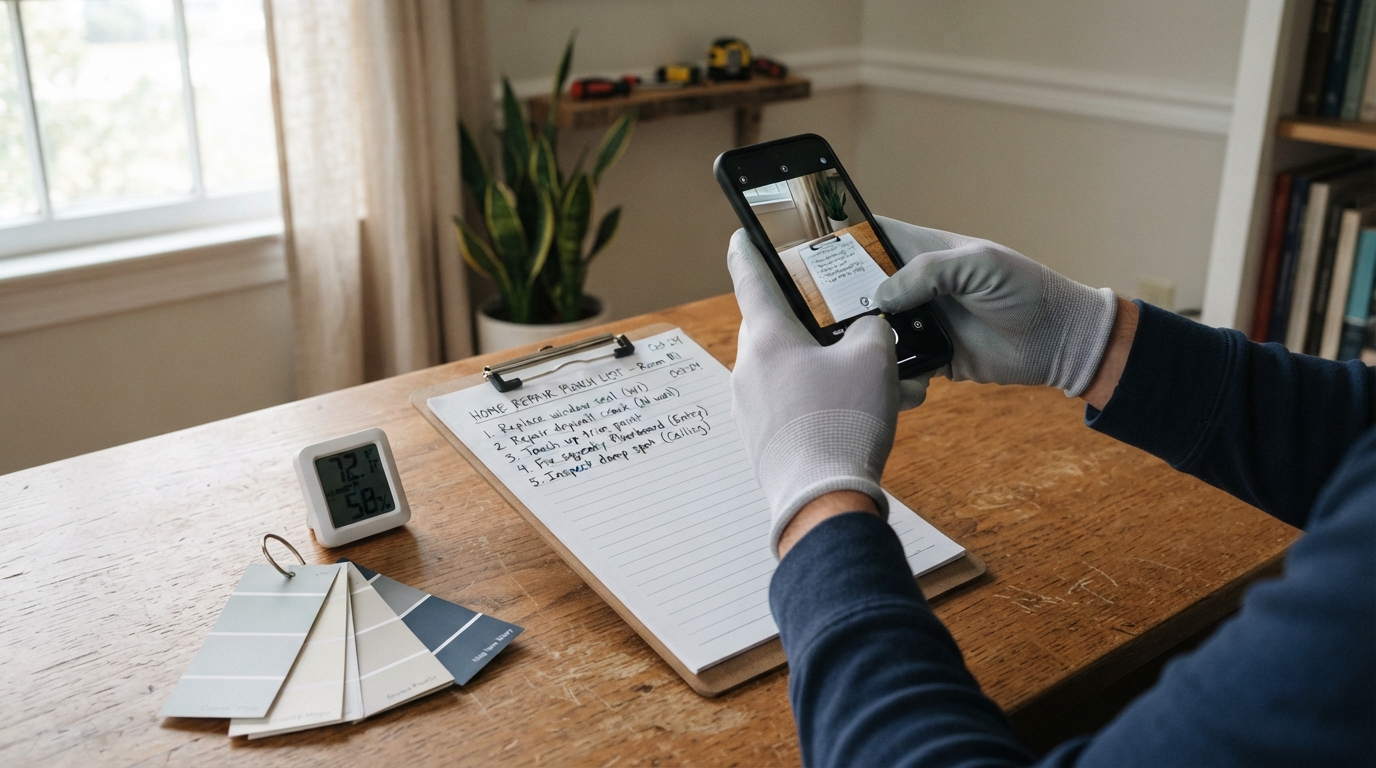
A practical tracker can be simple. Use one row for each issue and record:
- Location: Guest shower, back door, garage, north wall.
- Symptom: What you actually see—not a guessed diagnosis.
- First noticed: Include the date and a photo.
- Active or stable: Is it changing, wet, loose, or getting worse?
- Urgency: Safety, prevention, or cosmetic.
- Who can do it: Homeowner, appropriate handyman, HOA, or licensed specialist.
- Next action: Inspect, monitor, request an estimate, or arrange the correct trade.
Do not make a list so complicated that maintaining it becomes another chore. The objective is to remember the issue and make a decision.
How South Florida weather changes the order
Before a period of heavy rain or a major storm, pay special attention to obvious exterior openings and loose items, but do not perform roof, electrical, or structural work beyond your qualifications. After a storm, document new damage and follow safety and building procedures. The South Florida Seasonal Home Checklist provides a broader routine.
Humidity deserves its own line in your tracker. A room with persistent condensation or a musty smell calls for investigation, not just air freshener or paint. Start with Miami Indoor Humidity: What to Do First. The EPA advises keeping indoor humidity ideally near 30–50% and controlling the moisture sources that support mold growth.
Useful rule: If a task must be done to keep the next repair from failing, it probably belongs earlier. Fix the leak before the ceiling stain. Correct the failed substrate before applying paint. Choose proper TV anchors before worrying about hiding cables.
When hiring help saves more than time
DIY is reasonable when the task is safe, within your skill, and can be done without opening regulated systems or creating hidden damage. Hiring help becomes valuable when the repair requires tools you don’t have, multiple visits, difficult finish matching, or assessment that changes the job scope.
We also have a dedicated guide on DIY vs. Handyman in Miami. If you’re organizing work for a condo, review our Condo and HOA Maintenance Services page for related considerations.
Ready to turn the list into a plan? Request a free estimate for the appropriate maintenance items. Include an itemized list and a few photos per issue; state which ones are urgent and which can wait.