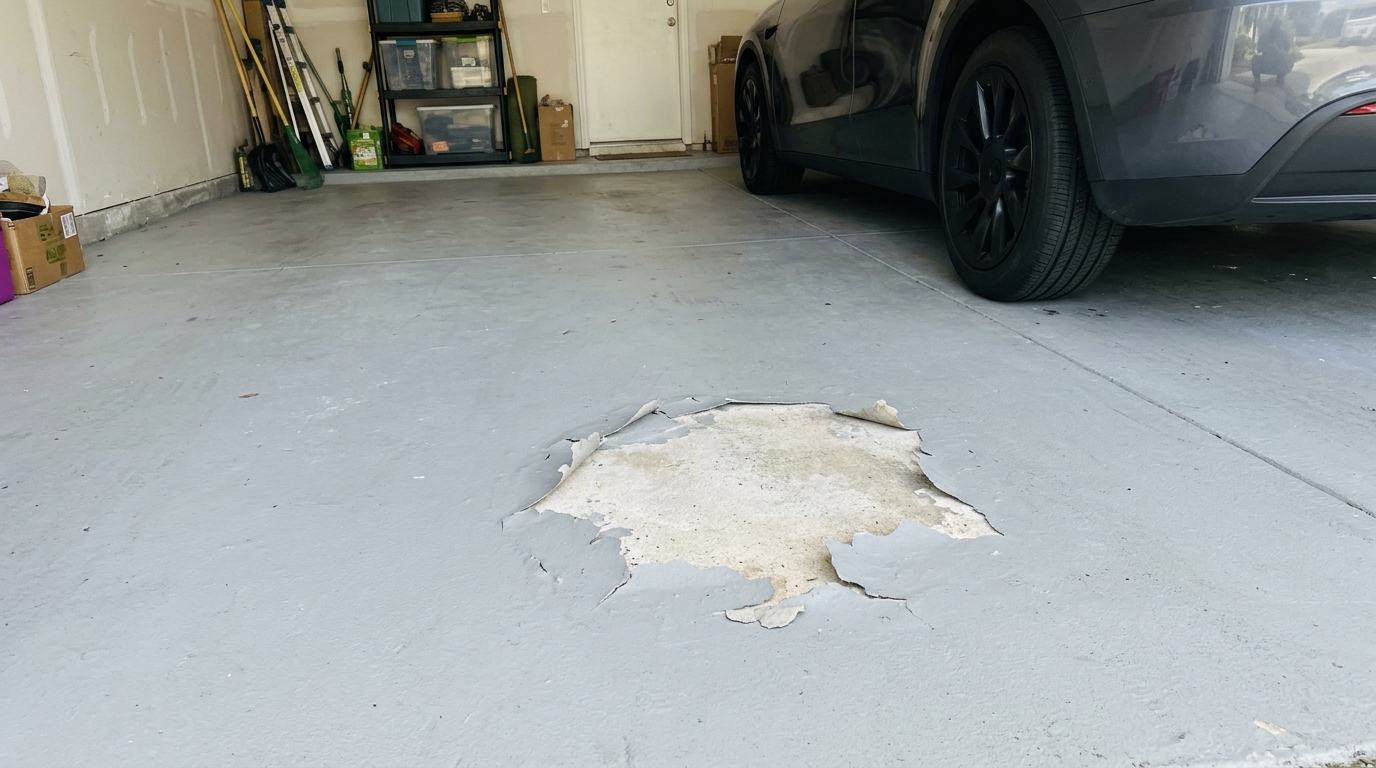
Your garage floor looked great when the coating went down. Now a tire has lifted a patch, the finish is flaking near the door, or little bubbles are appearing where the concrete should be smooth. The tempting fix is another can of paint. Unfortunately, a new coat over a failing one usually gives you a second peeling floor.
Start with the reason the first coating lost its grip. Most problems fall into a few groups: moisture moving through the slab, contamination, insufficient surface preparation, an incompatible product, or application conditions that did not match the product instructions. You do not need to be a flooring specialist to notice the warning signs.
First: find out whether the coating or the concrete is failing
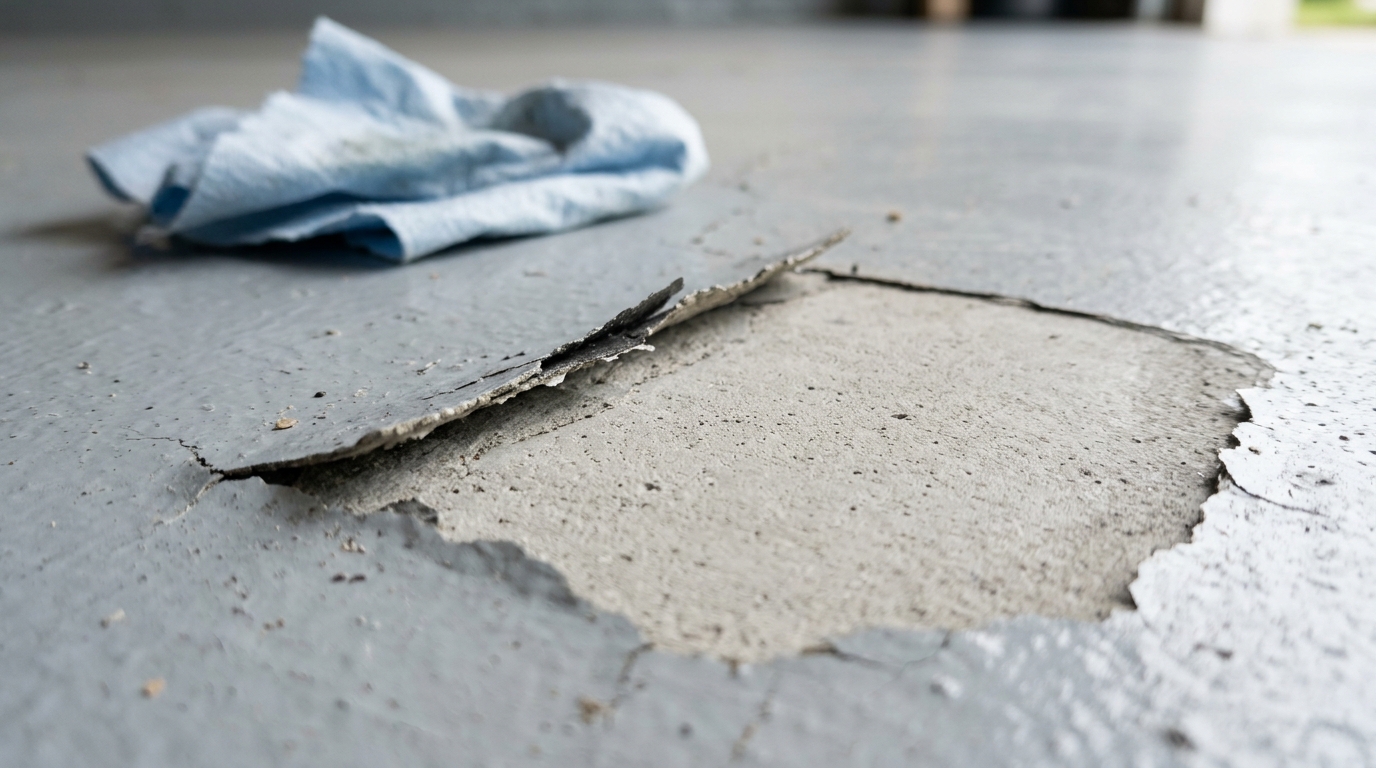
Look at an exposed patch. Is it clean, hard concrete under a thin layer that came off? That suggests the coating did not bond. Is the concrete surface powdery or crumbling? Then the substrate itself may be unsound. Do bubbles appear after rain or in humid weather? Moisture deserves closer attention.
A small scratch in an otherwise stable coating is different from widespread delamination. A scratch might be a cosmetic touch-up. Large sections lifting off need diagnosis before any new finish is selected.
Thinking about redoing the garage? Ask Hand It To Us about the surface preparation and repair work involved. A useful estimate starts with photos of the peeling area and whether the slab has ever been coated before.
Seven common reasons garage floor coatings fail
1. Moisture is coming through the slab
Concrete can look dry on top while holding or transmitting moisture. Certain coatings trap that vapor, and pressure or dampness can interfere with adhesion. Garage entrances in South Florida are also exposed to wind-driven rain and damp conditions. Those conditions do not prove a moisture problem, but they make it worth investigating.
Manufacturers publish moisture-testing requirements for their products. A simple taped-plastic screening test can raise a warning, but it is not a substitute for the specific testing a coating system requires. If moisture is suspected, identify its source and test appropriately before proceeding.
2. Oil, tire residue, or household chemicals were left behind
Even a clean-looking floor can carry oils and contaminants. Coatings need contact with the concrete, not a film of grime. Pay special attention to the parking positions, workbench area, and spots where fluids have dripped.
3. The floor was too smooth
A coating designed to bond with prepared concrete may not adhere to a dense, slick surface. Some systems require a particular surface profile achieved with approved preparation methods. Washing alone is not necessarily preparation. Do not assume that every floor needs acid etching; follow the chosen manufacturer’s instructions and get professional help for hazardous preparation methods.
4. The old coating and new product do not work together
A floor can already have paint, sealer, wax, or a coating that prevents a new product from bonding. A product marketed as epoxy may be a different chemistry from a two-part epoxy system. ‘One-part epoxy paint’ and a two-component epoxy are not interchangeable descriptions. Check the product data sheet rather than relying on the label’s biggest word.
For the original material comparison, read Epoxy Paint vs. Acrylic Paint for Garage Floors. This article answers a different question: why a coating you already have is failing.
5. The surface was not dry or the weather did not cooperate
Temperature, humidity, surface moisture, and curing time all matter. A floor that feels dry after washing may not meet the product’s requirement. Parking a car or washing the surface before the specified cure period can also damage the result.
6. Loose paint was coated over instead of removed
Fresh material cannot make a poorly attached underlayer strong. If a scraper lifts the old finish in sheets, you need to address that failed layer. The correct extent of removal depends on how sound the remaining coating is and whether the new system allows recoating.
7. The floor has movement, cracks, or ongoing water intrusion
A coating does not repair structural movement or keep a slab from cracking. Cracks that change width, significant settlement, water emerging from below, or recurring flooding may require assessment by an appropriate specialist.
What to do before buying another garage floor kit
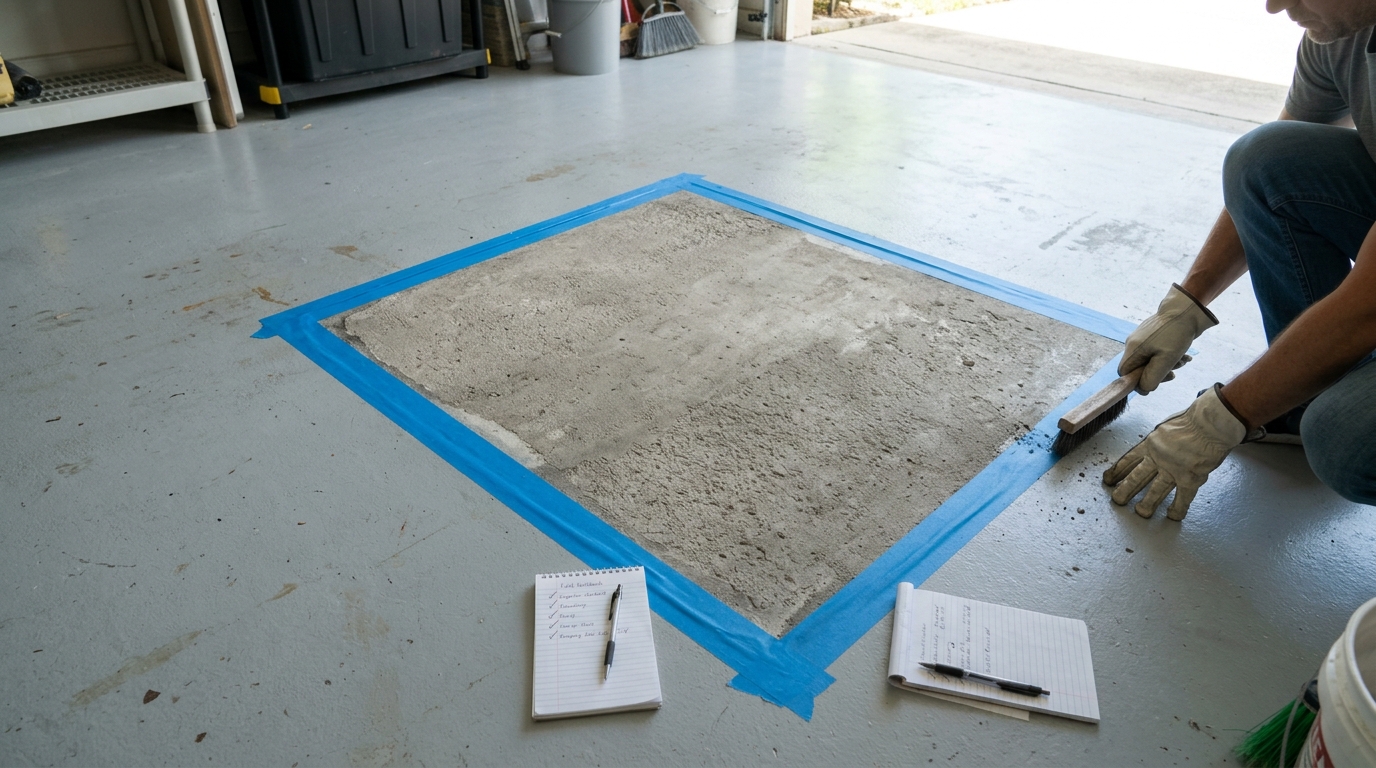
- Map the problem. Take wide photos and close-ups. Mark which spots are worn, bubbling, cracked, or peeling.
- Check the history. Note when it was coated, what product was used, and whether tire marks or water appeared first.
- Inspect for contamination. Look for oil spots, old sealer, and household chemicals.
- Evaluate moisture. If you see recurring wetness, do not coat over it. Follow the selected system’s testing standard.
- Read the product requirements. Look up cleaning, profile, primer, application, temperature, and cure instructions for that exact product.
- Decide whether this is a spot repair or a full redo. A coating failure across several areas generally deserves more than a patch.
Should you repair the coating yourself?
A small, dry, well-bonded floor with a limited damaged spot may be manageable for a prepared homeowner following the product instructions. A floor with widespread peeling, suspect moisture, a slippery finish, or unknown coating history is a different project. Surface preparation can be the hardest part, and grinding concrete creates dust and tool hazards that need appropriate equipment and controls.
If you are weighing several repairs at once, use our home repair triage guide to decide what is urgent. For broader help with residential repairs and maintenance, explore our handyman services.
Want a realistic next step instead of another failed coating? Send photos and request a repair estimate. We’ll discuss whether the requested work is within our services; specialized concrete or structural problems may require a qualified trade.