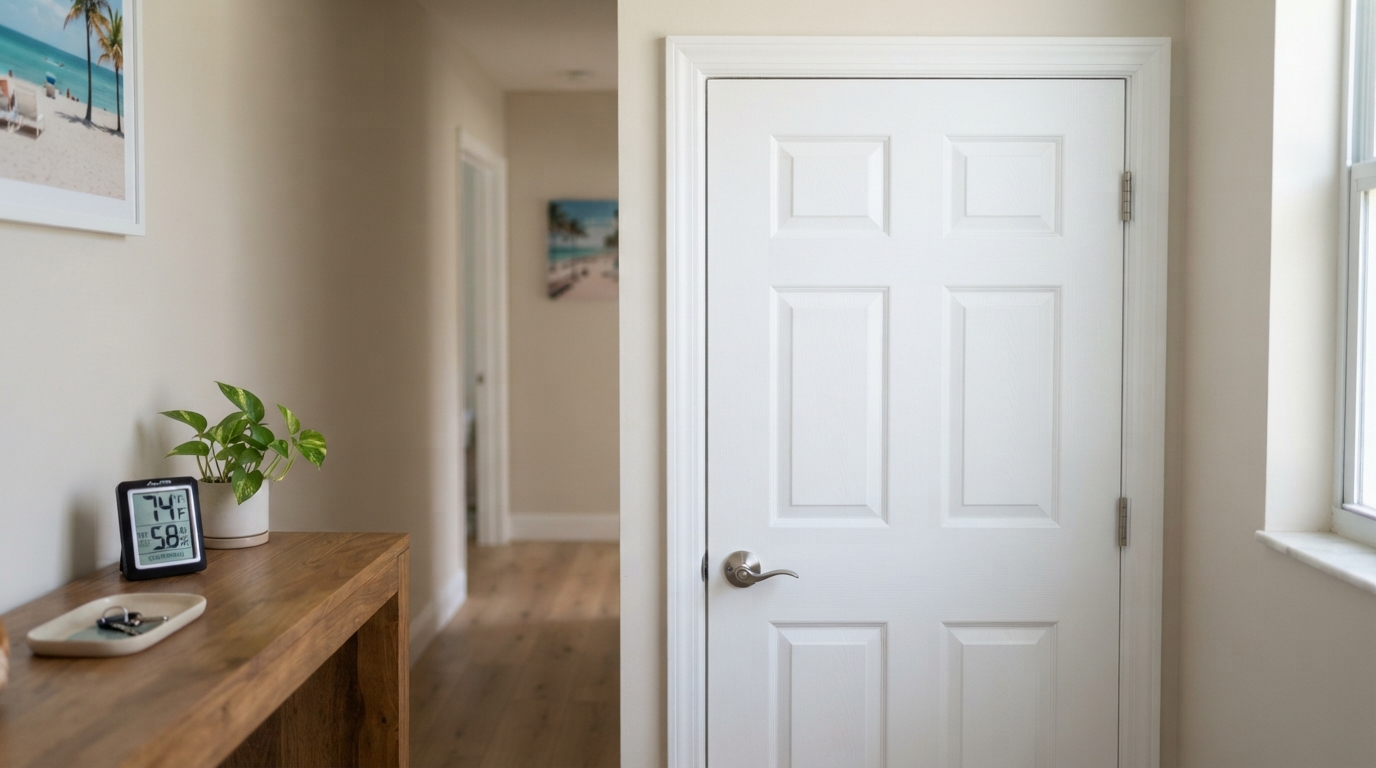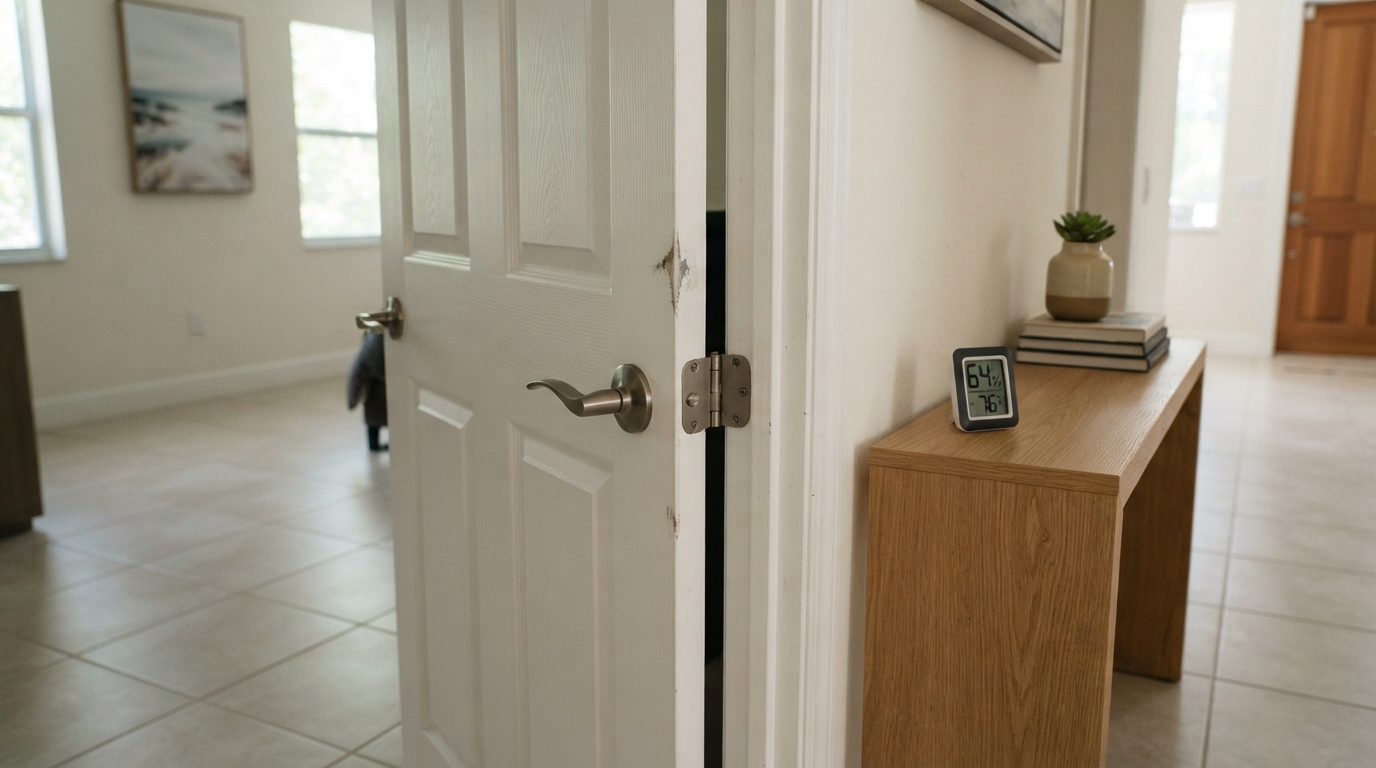
Yesterday your bedroom door closed perfectly. Today you have to pull on the handle twice to latch it. A bathroom door rubs near the top every rainy week, or a closet door drags after months of damp weather. Before shaving wood off the edge, look at where the door touches and why the gap changed.
Humidity can make some wood components expand, but it is not the only possible cause. Loose hinges, a settling frame, old weatherstripping, a misaligned strike plate, or moisture damage can produce a similar symptom. Removing material before you diagnose the cause can turn an easy adjustment into a permanently uneven door.
Start with the gap, not the saw
Close the door slowly and observe which edge touches first. Is the top corner hitting? Does the latch side have an even gap? Is the bottom rubbing the floor? Open the door and check whether it swings freely.
A door that scrapes at one corner and has visibly loose hinges may just need its hardware secured. A door that rubs all along an edge may be swollen or out of square. If the door or frame is soft, discolored, or visibly wet, prioritize the moisture issue.
Quick check: Slip a piece of paper through the gap at different points while the door is almost closed. You are looking for the place where the clearance disappears, not measuring a universal required gap.
Want the door to latch without forcing it? Request a door-adjustment or home-repair estimate. A photo of the entire door plus a close-up of the rubbing edge is more useful than a photo of the handle alone.
Five things worth inspecting
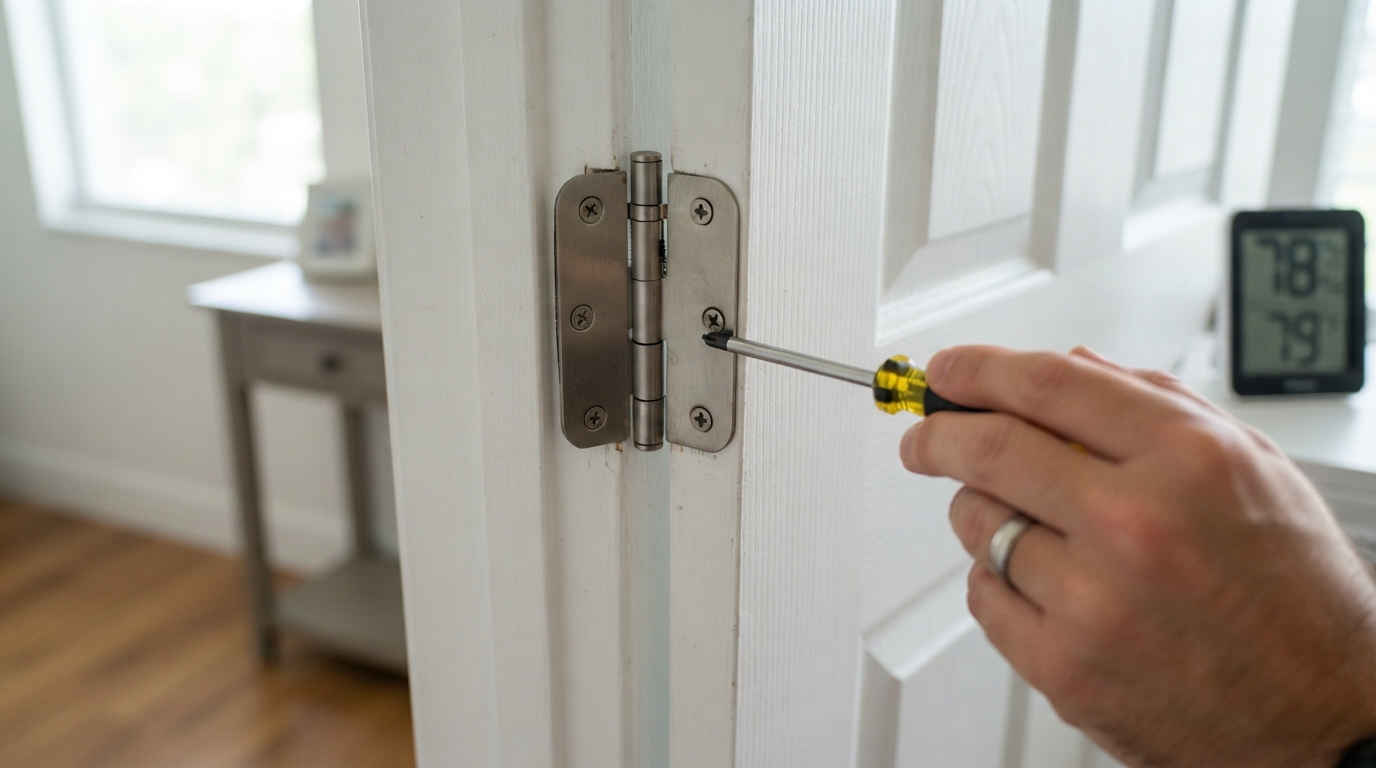
1. Loose hinges and missing screws
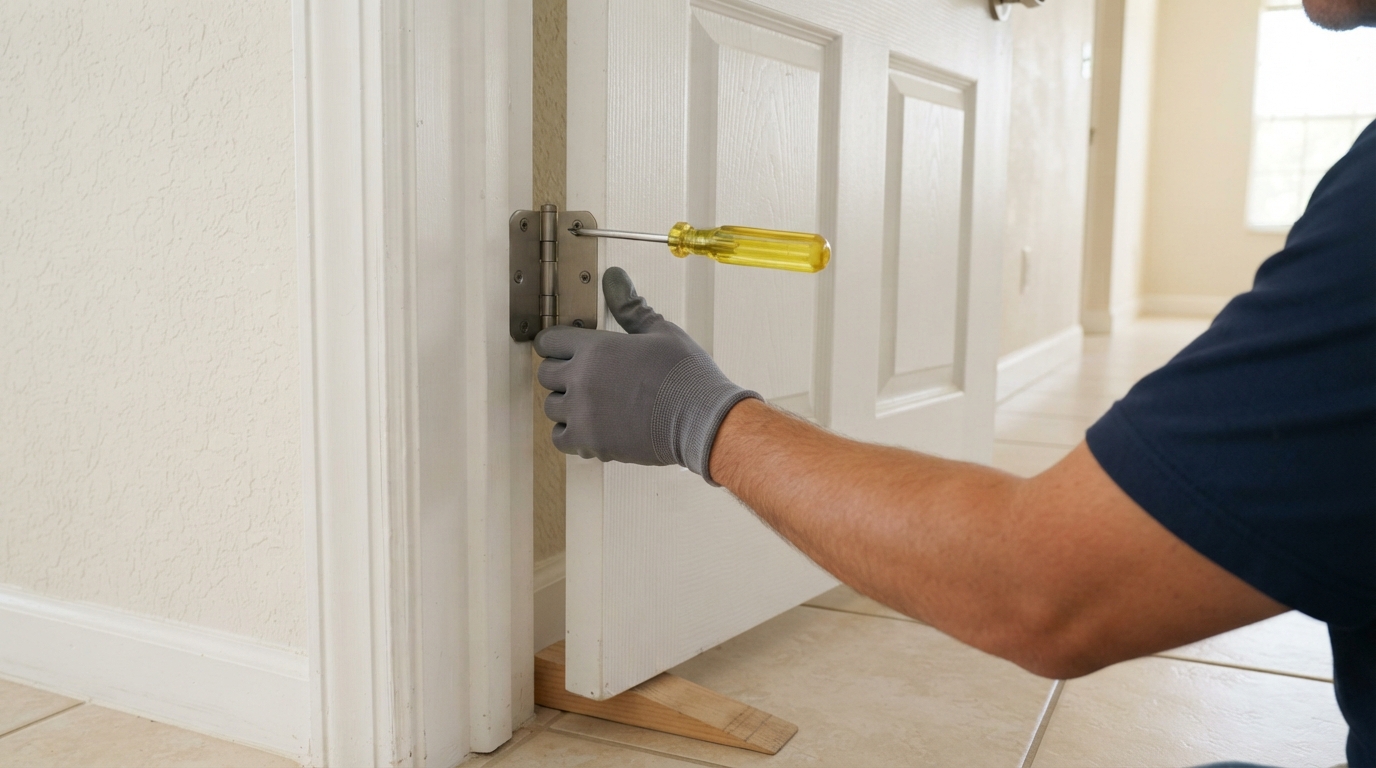
With the door open and supported, look for hinge leaves pulling away from the frame and screws that no longer hold. Do not keep tightening a stripped screw until it spins freely. A proper hardware repair may restore alignment without changing the door slab.
2. Swollen or damaged door material
Painted wood and some engineered door components can respond to moisture. Check for raised grain, peeling paint, soft edges, and swelling at the bottom. If water is getting into the door from a bathroom, an exterior threshold, or another leak, simply trimming the door treats the symptom.
3. Old weatherstripping or door sweeps
On an exterior door, a hardened or badly positioned seal can make it difficult to close. A worn sweep can catch the floor. Weatherstripping is important for comfort, but it needs to fit without preventing the latch from engaging.
The Department of Energy recommends caulk for stationary openings and weatherstripping for moving components. For a broader prevention checklist, see our South Florida Seasonal Home Checklist.
4. A latch that no longer meets the strike plate
If the door swings without rubbing but fails to latch, inspect the alignment between the latch and its opening in the frame. A latch issue is not necessarily a swollen door. Avoid filing away metal or moving hardware until you know what shifted.
5. Changes in the frame or floor
Visible cracks around the frame, a tilted jamb, new floor covering, or a change affecting several doors may point to a bigger alignment issue. Widespread movement or signs of structural damage warrant an appropriate professional assessment.
What a homeowner can try safely
Keep the approach conservative: clean the contact area, inspect the hardware, and gently tighten sound accessible screws where appropriate. If the hinges are secure and the door still binds, mark the exact contact point with removable tape. Avoid removing wood, cutting a fire-rated door, or changing an exterior door assembly without knowing its requirements.
For a condo, ask about building or HOA rules before altering an exterior or unit-entry door. Some doors are part of a fire, security, or weather-resistance assembly, and changes may be restricted.
When humidity is really the warning sign
If your doors stick during wet weather and you notice musty closets, condensation, or indoor relative humidity consistently above the recommended range, monitor the home rather than treating each door in isolation. An inexpensive hygrometer can help distinguish a one-off hardware issue from persistent damp conditions.
The EPA recommends keeping indoor relative humidity ideally around 30–50%. For practical local tips, read Miami Indoor Humidity: What to Do First.
You might also notice loose paint or swollen trim near the exterior side of the home. Our guide to why exterior paint peels in South Florida covers related moisture clues.
One sticky door or a whole punch list? Hand It To Us can review suitable minor adjustments and repairs. Tell us whether it is an interior, exterior, or condo entry door so the job can be scoped appropriately.